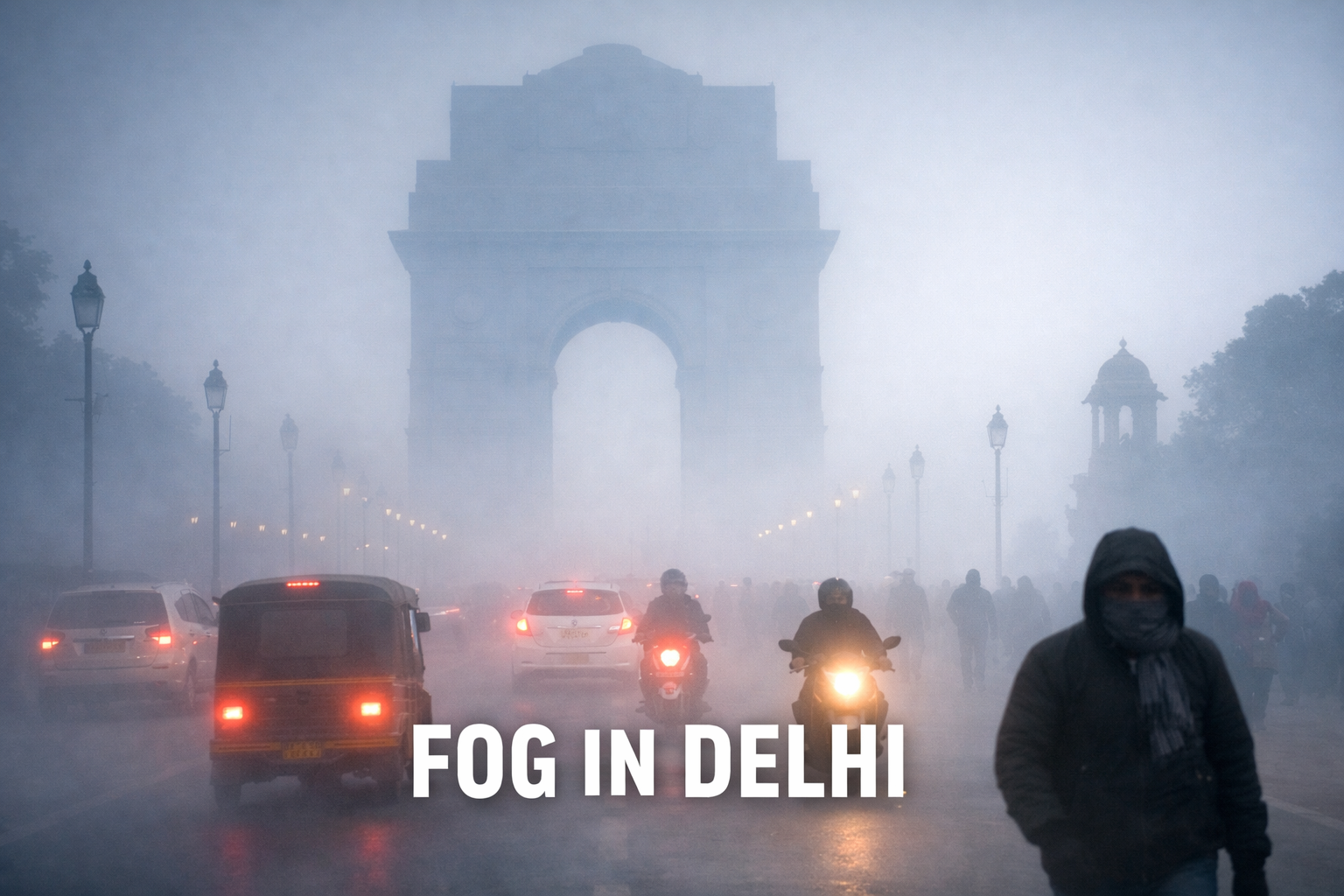
New Delhi: Dense fog has once again enveloped the national capital, Delhi, severely affecting daily life and transportation systems. As winter tightens its grip, thick layers of fog have reduced visibility across several parts of the city, leading to major disruptions at airports, railway stations, and on roads.
Severe Impact on Air and Visibility
On Monday morning, visibility in many areas of Delhi dropped to near zero, creating hazardous conditions for commuters. The India Meteorological Department (IMD) issued a yellow to red alert for dense to very dense fog in the region. Along with low visibility, the Air Quality Index (AQI) slipped back into the “Severe” category, raising serious health concerns for residents.
Experts say that a combination of low wind speed, high moisture, and cold temperatures is responsible for the formation of dense fog and smog in the city.
Flight and Train Services Affected
The dense fog had a major impact on air travel. According to airport officials and flight tracking platforms, over 100 flights were cancelled, several were diverted, and nearly 200 flights faced delays at Indira Gandhi International Airport due to low visibility.
Rail services were also badly hit. Many long-distance trains were delayed by several hours, causing inconvenience to passengers traveling to and from Delhi.
Traffic Chaos on Roads
Road traffic across Delhi-NCR slowed significantly as fog reduced visibility on highways and internal roads. Several minor accidents were reported due to poor visibility. Traffic police advised commuters to use fog lights, drive slowly, and maintain safe distances while on the road.
Health Advisory Issued
Doctors and health experts have warned people, especially children, the elderly, and those with respiratory problems, to limit outdoor activities. Prolonged exposure to polluted air combined with fog can lead to breathing difficulties, eye irritation, and throat infections.
Residents are advised to wear masks, stay hydrated, and follow government advisories during periods of severe pollution and fog.
Weather Forecast Ahead
According to the IMD, dense fog conditions are likely to continue for the next few days due to stable atmospheric conditions. A slight improvement may be seen once wind speeds increase or western disturbances affect the region.
Conclusion
Fog in Delhi during winter has become a recurring issue, intensifying the challenges of air pollution and urban mobility. Authorities continue to monitor the situation closely and urge citizens to remain cautious while commuting. Until weather conditions improve, residents are advised to take necessary precautions to ensure their safety and health.
Dense Fog in Delhi: Life Disrupted as Visibility Drops and Air Quality Worsens

ByE INDIA NEWS
Dec 30, 2025